Not everyone is born one: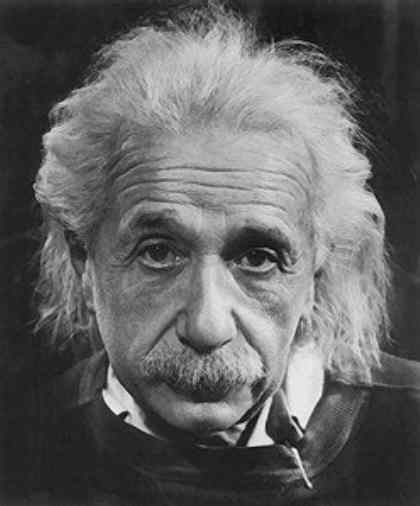
According to John Henry Newman, “all branches of knowledge are connected together, because the subject-matter of knowledge is intimately united in itself” (X308). Knowledge is the lynchpin in this process of education, but it is not an end, as Newman later discusses. The reason why I am in Plan II is because of this fact (actually, the reason is probably because I didn’t get into Stanford). The idea of education is not absolute knowledge but knowledge combined with a limitless creativity, an inspiration for critical thinking, analysis, and synthesis, and a desire to understand and not necessarily know. I cannot think of a more tailor-made curriculum and structure for this purpose than that which has been prescribed for us. Real education is that which provides us with the ability to form our own opinions and make our own decisions not from scratch but from a well of thought that is inevitably hammered into us as we bear the rigors of our schooling. How often do we say something along the lines of “Forget this. When am I ever going to need to know this?” when we become frustrated with our studies? A lot. But that is, paradoxically, the point. We learn these seemingly time-consuming facts and write papers and solve equations not so that we can memorize our answers and conclusions, but so we can have practice at the art of forcing ourselves to think about things that are foreign to us. Bump’s theory of “discovery learning” is exactly that, “Active learning supports the belief that knowledge can be constructed by you rather than received from a higher authority” (X343D). We learn so that we can grasp. Newman’s statement that, “The eye of the mind, of which the object is truth, is the work of discipline and habit” (X312) goes hand-in-hand with Bump’s theory. The fact that F=MA isn’t going to help us push a heavy rock up a steep hill, but a background in engineering and overall critical thinking and problem solving will.
Pure knowledge leads to a mere Sisyphian struggle:

I remember almost nothing from my 9th-11th grade history classes spanning from the period of ancient civilizations to the end of the Cold War, but the “work of discipline and habit” is enough for me to be able to grasp as a big picture the course of history, the development of civilization, and the reflections of the present onto the past, or vice-versa. Despite what the “Origin of University” says, the first universities were indeed Plato’s Academy, Aristotle’s Lyceum, and Epicurus’ Garden.
The remains of The Lyceum are far more than what is physically left:

The article states that the Academy, “taught its students philosophy, mathematics, and gymnastics” (X341). But that is far from what made these original schools of Greek thought special. As I have been thinking about the origins of science in Dr. Weinberg’s Modes of Reasoning class, I am beginning to understand what it really means to be an intellectual. The original philosophers and their students alike had no books to teach them about physics or math. They had only their minds, and in the present’s technological splendor, we owe everything to them. The original scientists were called philosophers rather than scientists because science did not exist. As the course description implies, they invented it. Let me write that again: they invented science. Talk about right brain-ness. Honestly, did the left side even exist back then? I doubt it, and I am thankful. Who cares that many of Aristotle’s theories and ideas were terribly wrong, he came up with them from nothing but his own observations. In the present, we are responsible for this same kind of thought process, but we already have the gift of previous knowledge. Through a university, “A habit of mind is formed which lasts through life, of which the attributes are,[sic] freedom, equitableness, calmness, moderation, and wisdom” (X309). The desire for this habit is what drives me in my quest to be educated.
As the words on the UT crest translate, “Cultivated mind is the guardian genius of democracy” (X305).

It is our responsibility, more than anything else, not to memorize formulas and dates and equations, but to employ the curiosity that originally engaged our desire for this knowledge in new, creative, and abstract ways. Our individual and daily encounters in the classroom and our studies build the left-side of our brains, but it is the journey and quest for that knowledge that fosters the right.
Although it may have been cool to say that I got in to Stanford, the words “I am in Plan II” resound. At least in mine.

No comments:
Post a Comment