Wednesday, November 12, 2008

A central theme of this course is multimedia. We practice weekly to achieve smooth integration of verbal and visual rhetoric in order to convey a message more powerful than one without the other. Perhaps the most potent example of this was our viewing of Earthlings. I read the entire screenplay in the anthology without squirming or looking away from the text, but I can barely get through fifteen minutes of the film. I beheld the power of multimedia as my stomach churned and I focused at the bottom corner of the projector trying to ignore the gruesome images on the screen, unable to look away entirely. The reason for this is “’The artistic representation of history,’ Aristotle said, ‘is a more serious pursuit than the exact writing of history, for the art of letters goes to the heart of things.’”[1] When I think of Dobie’s mustangs, I think of my times in the wilderness when I have observed animals in their natural habitat. In my backyard even, I have been entranced by the behavior of ants, squirrels, and owls. There is indeed something about the artistic representation of nature that cannot be read in a text or even watched in a movie. In their natural state, animals are beautiful.


If there is one animal I wish I could see in its natural state, it would be the lion.[2]

Sometimes, I idolize animals. Certain animals, at least, while the knowledge of what is in Earthlings lurks in the back of my mind. They seem so blissfully ignorant, so unaware of the problems in life, yet so passionate and alive at the same time. My dog Jacie is a perfect example.

She is always ready to play.


What makes them beautiful is what makes them natural. Animals don’t worry about news, technological advances, or college. They worry about what is for dinner and when they can reproduce. What a life. Man, though deemed superior by himself, is so troubled, “the rule is simple: the more machinery man gets, the more machined he is.”[3] The advancement of mankind is at a snail’s pace, yet we are entirely concerned with what might be regarded as trivial in the great scheme of things. The more “machined” we get, the less natural we are, and the less beauty there is in our life. On that same note, it can be argued that this is our normal state—to contemplate trivially the goings on of the universe. But that is another argument.

So it becomes that what is natural is beautiful. Dobie’s mustangs remind me of a scene in American Beauty.


[4]

Although the plastic bag is far from an organism, it is beautiful because it is absolutely natural: “Only the sense of being in place gives natural horse or natural man contentment.”[5] Imagine being that bag, that sense of being in place, not caring where you are going, and breathing in the electricity of the air. Had I an ultimate goal, it would be to be like that bag, somehow. But I am human, and it is not that easy.


[1]850
[2]http://www.youtube.com/watch?v=_BtMuSjnGcY
[3]844
[4]http://www.youtube.com/watch?v=O3OhrWr5lzk
[5]843

Wednesday, November 5, 2008

A Compassionate Carnivore?

As I force myself to confront internally the morality, rationality, and reason behind my consumption of meat and other animal products, I find that the greatest chasm in my mind to cross over is the bridge of the sympathetic imagination. I find it hard enough to extend to other humans. Each of us has a unique past, an original paradigm, and individual constructions. Accounting for the universality of these constructs is the parallelism our nature and the standardization of our creation and genetic makeup. Yet even in this parallelism we can do no better than assume that these constructs are not oblique—we can never really know another.

Much like the obliqueness of each line,
our sympathetic imagination will always be in limbo. [1]

And so, the extension of the sympathetic imagination to those beings we deem animalistic is a much more difficult task. Indeed, “our minds are not bats’ minds.”[2] I do not quote this in order to argue our intellectual superiority to animals. Ironically though, and to the dismay of any animal rights activist, we are, quite literally, above the animals on the food chain. Considering our rather modest physical stature in comparison to some of the earth’s mightiest beasts, most will attribute our position to intellect. Regardless of what stance you want to take, the fact remains: we are meant to eat meat.

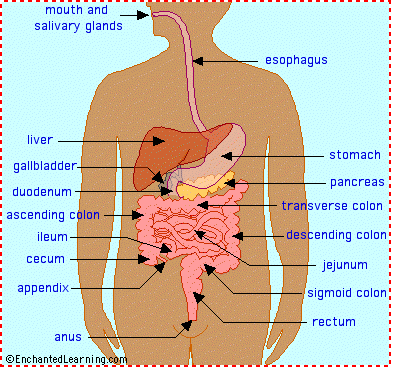
This was made for meat.[3]

Elizabeth Costello brings up the next important question, “Do we really understand the universe better than animals do?”[4]. I like to think that rarely has a cow ever contemplated its place in the world, but then again, this convoluted delicacy of the human mind may in fact be a plague more than anything else. As Costello further points out, she is “neither a god nor a beast.”[5] Before I begin to question an animal’s place in the world, I am going to have to start with myself, or, being no god, not pose the question at all.


Perhaps that is exactly why I, and all omnivores alike, continue to consume animals. Given the uncertainty and uneasiness of our own condition, why should the sympathetic imagination be extended to those whom we can’t even communicate with? Arising from this uncertainty is the defensive tactic of ignorance. “We avoid things that might disturb us” not because, in the case of animal rights, we support the torture and slaughter of animals, but because we already have enough to think about.[6] Even further, it is our nature to understand that we have to eat in order to survive, so there exists absolutely no intrinsic stigma to eliminate meat from our diets. Costello draws a parallel between meat-eating and the Holocaust stating that “ignorance may have been a useful survival mechanism, but that is an excuse which, with admirable moral rigour, we refuse to accept.”[7] I disagree with Costello here. In the pointless mass-murder of millions of people to satiate a soul-less dictator, ignorance does remain an unacceptable excuse. But to the billions of people, many of them starving, who need meat for sustenance, ignorance is something I won’t lose sleep over. As Costello’s son points out, her “opinions on animals, animal consciousness and ethical relations with animals are jejune and sentimental.”[8] At some point we have to draw the line of what we are responsible for. To the vast majority, the life of animals that can otherwise foster the survival of humans doesn’t make the cut.

I would eat this steak. But probably not if I saw the cow that it came from.[9]

I have raised chickens before, gathered their eggs, and had them for breakfast. I did this on a weekly basis for an entire year when I was in 4th grade. Never once did I flinch at this process. As an impressionable, blossoming 9 year old, I stole unborn babies from their mothers without a second though of it. Was I a heartless killer? No, I was acting naturally to procure food and turn a profit for my labors. There was nothing wrong with what I did.

I’m going to assume that most animal rights activists are also pro-life.[10]

And finally, I come to compassion. But when it comes to animal rights, what compassion really exists? Let me introduce the doctrine of psychological egoism: it states that all humans act out of self-interest all the time. Altruism does not exist because it is merely a process that can make the performer of the altruistic act feel better about his or herself. Essentially, this is a pseudo-philosophy. It cannot be proven or disproven, as the proof and disproof of it is purely circular. But it begs intriguing questions. Doniger points out that, “Buddhists and Jains cared, like Elizabeth Costello, for individual human salvation, more, really, than they cared for animals.”[11] Further, Coetzee’s novel poses the question whether “vegetarians are really trying to save animals, or only trying to put themselves in a morally superior position to other humans.”[12] The doctrine does not apply just to vegetarians or animal rights activists. But it holds a stake in this debate. So, I ask all those who are vegetarians and/or support animal rights: do you do it because you truly feel compassionate and care for animals that you will never see, never connect with, never talk to? Or do you do it because it helps you sleep at night? I do not pose this question to degrade your stance or question your morality. I pose it because it is the reason why no one will ever convince me to stop eating meat.


[1] http://www.postaudio.co.uk/education/acoustics/room_images/oblique.png

[2]J.M. Coetzee, Elizabeth Costello (New York: Penguin Books, 2003), 76.

[3] http://www.enchantedlearning.com/subjects/anatomy/digestive/color.GIF

[4]J.M. Coatzee, Elizabeth Costello (New York: Penguin Books, 2003), 90.

[5] Ibid., 62

[6]Coetzee Introduction, X736.

[7]J.M. Coatzee, Elizabeth Costello (New York: Penguin Books, 2003), 62.

[8]J.M. Coatzee, Elizabeth Costello (New York: Penguin Books, 2003), 61.

[9]http://whatscookingamerica.net/Beef/BeefPhotos/TBoneSteak3.jpg

[10]http://www.asby.com.sg/image/EGG.jpg

[11]Wendy Doniger, “Reflections,” The Lives of Animals (Princeton: Princeton University Press, 1999), X749.

[12]Peter Singer, “Relfections,” The Lives of Animals (Princeton: Princeton University Press, 1999), X743.

A Compassionate Carnivore?

Monday, November 3, 2008

Lesson Plan 11/4

Topics: Animal rights, extending the sympathetic imagination to animals


Main conflict: the cruelty of eating meat, regardless of how it was slaughtered.


Jenny: “It all comes down to pain and suffering…Pain and suffering are in themselves bad and should be prevented or minimized, irrespective of the race, sex, or species of the being that suffers.” (X729) My basic belief is this: no one (animal or human) should have to suffer at the hands of another.

Isn’t it our duty to give up a few luxuries, to become less selfish, in order to prolong all of the precious lives on this earth?
-why is it? do we have obligations to other species? perhaps to curb abuse but also to go so far as to eliminating a very natural part of our diet? not a rhetorical question, a topic to be debated

Samantha: While I would like to say that this movie instantly transformed me into a PETA activist and adamant vegetarian after seeing the gruesome processes by which our eating animals are slaughtered, I just love meat too much.
- is this not a contradiction and one that all meat-eaters must live with?


Ben:
One of the main problems that I had with the script was the argument about how “if we had to kill our own meat, we would all be vegetarian”[2]. If we all were forced to amputate our own legs, would there be no doctors, and everyone would then die? If we all had to manufacture auto parts, would there be no cars?

Also stating that we are all entitled to our own choices.

Skaggs:
I don’t mean to dismiss the idea of an alternative solution entirely, but my line of reasoning hits too many dead ends, and I can’t think of a practical and manageable solution myself.
-in the end we have to concern ourselves primarily with the advancement of our own species.

But no matter what you do, an animal that is to be slaughtered will suffer. I will not simply give up eating meat because other animals are suffering.
-the rub of ecosystems. should we start PETP (p for plants)? of course not.


Austyn: we have things to work on among our own species before we worry about animals.
Earthlings as propaganda.


Tyler:
I don’t think business owners particularly enjoy the fact that they inhumanely kill animals, but they certainly have no problem turning a blind eye if it nets them a greater profit.
-the epitome of human self-interest. how many of you are absolutely willing to go against this?


Pets as slaves?
-not sure how most feel about that....


Russell: "Even through sympathetic imagination, humans will never be able to fully understand a chicken's wants and needs."
-Russell should fight Dana.

Dana: Humans are undeniably animals
-but animals eat other animals.

Lydia would agree with Dana.


How ignorant are we really?

Skaggs, Ben, and Jenny seem aware.
-does ignorance and/or tolerance of abuses in slaughterhouses make a difference when it comes to eating meat, regardless of how the animal was treated?


Sympathetic imagination to pets: Jenny, Ben, Brian
-is it any more than the time we have spent growing up with them that makes us compassionate? Are there deeper connections? Other than those animals which we domesticate, should we have obligations to feel the same compassion for all animals?


Animals in Alice:

Jenny and Sammy both cite the lessons we have to learn from them.
-is it legitimate to use such an inane tale to advance our dependence on animals?
I will always be an omnivore. Nothing is going to change that. But I squirm at the fact that, according to Shaun Monson, I am ignorant. Meat tastes really good, and I am aware of the general abuse that occurs in slaughterhouses. But I would never directly hurt an animal. To an animal rights activist, I just contradicted myself. To the overwhelming majority of the human population, I have said nothing wrong. Perhaps, “Ignorance is the speciesist’s first line of defense.”[1] That “ignorance” is testament to the power of such a state of mind. I am conscious of what goes on, and I agree with the statement that “Killing an animal is, in itself, a troubling act.”[2] My circular reasoning currently leads me to believe I am either in denial of my ignorance or disbelief at my lack of compassion.
My cat Pepper. We, in fact, adopted her as a stray because we knew she needed a home.

Assume for a second that it was a common American practice to eat cat. I would never touch one. After growing up for the past ten years with Pepper, I have formed a bond. But I could never make that some connection with another animal (i.e., a cow) without the elongated juxtaposition I have undergone with Pepper. In his book The Outermost House, Henry Beston writes, “We need another and a wiser and perhaps a more mystical concept of animals.”[3] In order to curb the abuses, this is indeed what needs to happen. But the only way to achieve such would be to force all meat-eaters to grow up as cattle-ranchers. As long as we are human, though, we have other responsibilities. Activists may refer to those as trivial, but I object that those activists have absolutely no business telling me what is trivial and what is not. It is up to each individual to decide for his or herself what matters most, to prioritize a list a conveniences and then choose what he or she wants to believe in. Monson argues that “We must learn empathy, we must learn to see into the eyes of an animal and feel that their life has value because they are alive.”[4] Monson’s ideal is nearly impossible to achieve on a massive scale. Without communication, it is simply not going to happen. And, in fact, we cannot communicate fluently with animals, no matter what some left-wing, nature lover will tell us.
[5]
No matter how much time I might spend around an animal, trying to “bond” with it, I will never reach a mutual sense of communication. That is indeed the rub.

People will always exist above animals. Our genetic capabilities afford us this, and so it is hard to attribute the same rights to animals that humans deserve. Donald McNeil points out that the conflict exists in “how much kinship humans feel for which animals, and just which ‘human rights’ each human deserves.”[6] At some point, the idea of “animal rights” becomes silly. Apes driving cars? That should not even be taken seriously enough to be written about. Perhaps it boils down to conceit.

In Alice, there is a key difference: those animals could talk. After seeing a talking, hurried, white rabbit, “it occurred to [Alice] that she ought to have wondered at this”[7]. I might wonder, too, should I befriend a cow, whether or not I should order steak next time.

[1]“Earthlings”, E603A Course Anthology, Shaun Monson, X729
[2]“Earthlings”, E603A Course Anthology, Shaun Monson, X707
[3]“Earthlings”, E603A Course Anthology, Shaun Monson, X703
[4]“Earthlings”, E603A Course Anthology, Shaun Monson, X706
[5]http://www.insidesocal.com/greenspirited/cow2.jpg
[6]"When Human Rights Extend to Nonhumans", E603A Course Anthology, Donald G. Mcneil Jr., X732
[7]Alice’s Adventures in Wonderland, Lewis Carroll, pg. 12

Wednesday, October 29, 2008

Alice (and Carroll) as Leaders

We are all born into ignorance. Through the trials and tribulations of life, we hope to one day achieve understanding. It is the human condition.

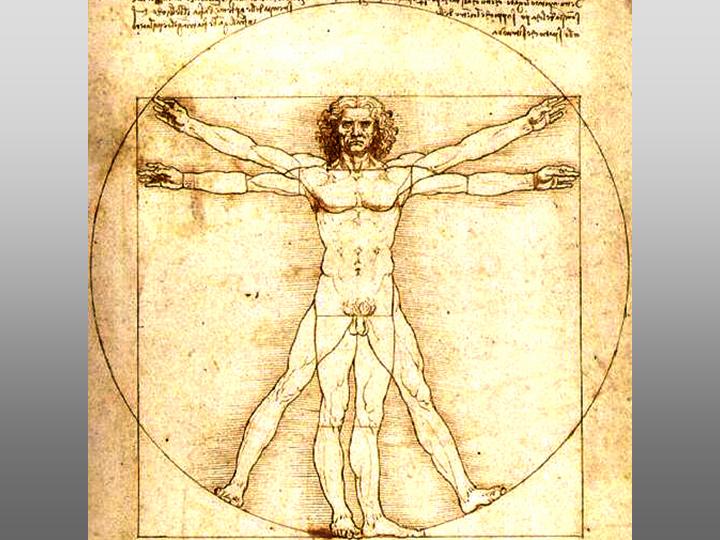
Nowhere does da Vinci draw anything pertaining to what is inside.

And so there isn't much heroism in conquering that ubiquitous shortcoming. It can effectively be summed up in what we call "growing up." But Alice does do something unique, something heroic. She does it on her own.
Those flowers certainly aren't human.

Perhaps I view it as heroism only because of that fact. Honestly, I am a very shy person. I hate approaching new things, and I hate approaching them a lone. But Alice not only chooses to venture down the rabbit hole, she not only stands up to but conquers the question when it is posed to her, "Who are you?"[1] Wonderland exists not only as an escape from the ordinary but also as a probe of her individual. When placed into the most foreign of lands, she forges her perspectives through experience a lone. As she tries to grab some sort of handle on who she is, "she crossed her hands on her lap, as if she were saying lessons, and began to repeat it, but her voice sounded hoarse and strange, and the words dd not come the same as they used to." [2] Having lost her sight of even herself, she dives deeper into the depths of Wonderland to find out more. Her methodology is venerable, as Sharon Begley points out that "If you make enough weak measurements, the average comes impressively close to the actual value."[3] Alice does indeed make plenty of "weak measurements" by her own hand. Out of them, she amasses an average out of the extraordinary, deriving from her own experiences a form of reason. Much like the Greek philosophers of Antiquity that I have written about before, she learns through her own experiences "as opposed to listening to someone else." [4] Much as was the passion I wrote about in P's 1 and 2, Alice creates her own individual in a land full of nothing but wonder. I don't know that I can call it inspiration or bravery, but I can view it as an example of accomplishment, of conquering the uncertain. Two goals that I believe everyone should strive for.
I, for one, would not want to go down there. Perhaps it is everyones greatest fear: the unknown.

The topic of writers as heros then must come up if whom they create are to be viewed as such. Perhaps the word hero is too strong for a real world example, but the nomers role model and leader suit them perfectly. For the same reason that Alice is a hero, Carroll is a hero (a leader, at least). He created this vision of his through experience and shared it with us. His motivations and influences may be unbeknownst to us, but regardless, he crafts a lens through which we can see our own lives in the color of metaphor, guiding us with his insights and leading the way to higher understandings of that which surrounds us. Carroll, and all writers, paint for us visions of life that we not otherwise have, and for that, I look up to them. For I am no Alice, and I am afraid.


[1] Alice’s Adventures in Wonderland, Lewis Carroll, pg. 48
[2]
Alice’s Adventures in Wonderland, Lewis Carroll, pg. 23
[3] "Putting Time in a (Leaky) Bottle" E603A Course Anthology, Sharon Begley, X690
[4]
“How Alice Leads/Is a Hero”, E603A Course Anthology, Amber Berclath, X692A

Monday, October 27, 2008

Better Together - Jack Johnson

Jack Johnson asks the questions that I have begun asking myself because of this class: "Why are we here? And where do we go? And how come it's so hard?"[1]

Last week, we discussed what I desperately wanted to boil down to the interminable struggle of ignorance versus enlightenment. It is a favorite topic of mine--one that I have written many papers about. Specifically, I want to reference the maxim, "It is better to have loved and lost than never to have loved at all." I think that is how it traditionally goes, but I remember it with a slight syntactical change and a difference of end punctuation: "Is it better to have loved and lost or never to have loved at all?"


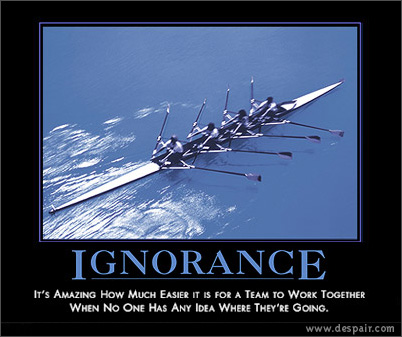
The sport of rowing reflects the benefits of an absolute ignorance:

I have written several papers on the subject throughout my high school English career, and my conclusions remain immutable. Either absolute enlightenment or absolute ignorance is ideal, but mankind possesses the capacity for neither.

Life as a rock: always with a smile
So, then, it seems as though I approach the subject of compassion versus survival of the fittest with a rather cynical paradigm. But, given that I am human and thus strewn into the agonizing pathos of our yearningly compassionate nature, I try my best to find that middle ground, flying in between the extremes in a way that Icarus could not.

It is no wonder why Ovid's works are indeed epic:
his messages are eternal

I would like to disagree with Dana and echo Saumya: it takes both compassion and self-interest to succeed. My proof--my high school class.

We wore white-tuxes instead of gowns.
Yeah, it is pretentious, but I will always be indebted to those who sat with me.
75 other boys walked across the stage with me last May. Exactly one third of those are attending Ivy League schools, a second third to similarly selective schools: Duke, Stanford, Northwestern, Notre Dame, and Georgetown. We had 23 National Merit Scholars. I am absolutely NOT trying to brag by saying "Oh yeah, well my high school was smarter than yours!" I do think that those statistics say something about the learning environment that exists at that school, but they also reflect the pomp and pretention that is rife within its walls. For the sake of discussion, please only focus on the former.

Anyway, my point is that there is a reason that some parents are willing to fork out exorbitant amounts of money for private school education (I, for one, think I would have thrived more in a public school setting, but I cannot deny the positive impact of the private sector). The reason: we 75 learned together. No one was left behind because of competition. Sometimes, groups of fifteen to twenty of us would collaborate on a single lab report, math problem, or reading assignment. We learned from great teachers, but we learned infinitely more from each other. I would not have made as high a grade in sophomore year Modern World History if not for my best academic friend Dhruv. More than that, I would not be the writer that I am without him, as I perpetually strive to mimick his trancedent eloquence. It is because of that environment that private schools are often excellent alternatives to public ones. We all looked out for each other, and those who witheld information, opinions, or insights were shunned. While we were all self-motivated and independent hard-workers, compassion fostered the harmony of our collective intelligence.

I feel as though Jude comes close to this ideal: "My God, how selfish I was! Perhaps--perhaps I spoilt one of the highest and purest loves that ever existed between man and woman!"[2] Jude takes it too far though. He focuses far too much on the idea of selflessness that he forgets to look out for himself. His obsession with Sue is impossible, and I refuse to believe that Hardy wants us to think that intrinsically, Jude does not realize this. And so, Jude's struggle is one of excessive compassion, or compassion in the wrong form, at least. Sue sits too far on the other side of the fulcrum: "Remember that the best and greatest among mankind are those who do themselves no worldly good. Every successful man is more or less a selfish man. The devoted fail...."[3] Indeed, successful men are selfish, but only to an extent. I am a man of absolutes, and I despise taking the middle ground. But the ultimate plight of the human condition requires that we do so.

[1] Johnson, Jack. "Better Together." In Between Dreams. 2005.

[2] Thomas Hardy, Jude the Obscure (New York: W.W. Norton & Company, 1999), 278

[3] Hardy, 284

Wednesday, October 22, 2008

I had it figured out

I am the typical teenager. I have received a baseline high school education and have enough experience to take care of myself. I pretty much have it all figured out. Right, Mom?


I could've smoked a pack a day!

It obviously doesn't quite work that way. But if there's one thing that I had figured out, it was what my high school counselors would refer to as "The College Process." I knew what I wanted. I didn't even visit schools. I went to Philadelphia once and checked out about eight different campuses while I was there, but that was a waste of time and money, albeit one my parents brought on themselves. You see, my brother is two years older than me and had already gone through the entire process. His objectivity and realism and borderline apathy carved out two years early the entire process for me. Along with my dad's sage advice (he is, in fact, the most down to earth being I have ever come across), I realized that in the end, it would not really matter where I go. "College is college," he would tell me. On that same note, he fully supported what I ever wanted to do, but I did not ever find a reason to put much stock into more than those three words. I wanted “the perfect place for contemplation” as well as a “protective environment within which to indulge” and nothing more (X638). I knew I could fulfill those ideals at almost any university in the country, so to be honest, I focused almost exclusively on three things: reputation, cost, and the attractiveness of the female contingency. In my mind, those were the only three criteria that I could use to discern one college from another. I was mailed at least six trees worth of literature in the form of college brochures, and they all said the same thing and had the same picture of a black, female political science major on the first page. Much like Jude Fawley, I "was an earnest and studious youth who is inspired by the example of the village school-teacher to set his heart on a place at Christminster” (X638). I could find an education anywhere, so why make that big of a deal out of it?


Well, she isn't exactly black, and this is a postgraduate brochure.
But that's the point: its dumb.

In the end I wasted a lot of time applying to way too many schools. I earned a spot on seven waitlists, was rejected at four schools, and accepted into three. So I didn't have the most successful application process, but I didn't care. I had finally heard back from the last of those schools on March 31 at exactly 4:00 p.m., and my deposit at UT was paid by 4:15.

Maybe I got lucky. Maybe its just that Plan II is that much cooler than advertised. Maybe I'm intrinsically miserable and that acid I dropped on my way down here was some good shit...oh wait... I don't do drugs... But I am happy here, and as far as I can tell, I am quite a bit happier than all of my friends at different universities. In a Jude-esque manner, I didn't quite have much success in the college process. For the minutes that existed between 4:00 and 4:o5 on that fateful last day in March, the year of our Lord two-thousand and eight, I sulked "with the awful sense" that I had "wholly disgraced" myself (Hardy 15). But that feeling of impotence, un-accomplishment, and disappointment was brief. In an anti-Jude-esque manner, I did have much success in the college process. I ended up here. Fuck Notre Dame, and I didn't even apply.


Wednesday, October 15, 2008

The Leadership of Individuality

Where Is My Mind - The Pixies

The Pixies chant in the background, “With your feet on the air and your head on the ground….” The first building explodes, “…Try this trick, and spin it, yeah….” With a bellow like thunder, a second tumbles. “…Your head will collapse, but there’s nothing in it….” The remaining buildings quiver with the inanimate fear imposed on them by the viewer. “…And you’ll ask yourself, where is my mind?” Guitar riffs wail as the camera pans out, and Edward Norton’s nameless character clasps the hand of his new love, creating for himself the sublime ending to his forged conquest of the mundane. Like the buildings he watches crumble, he razes mediocrity in realization of the importance of identity. His mind, for the first time, drops anchor, creating his self between his ears, in perfect harmony with the apocalypse he harbors.

Norton's pilgrimage is that of meaning and identity.

The purpose of fight club is, as Tyler Durden puts it, because “We have no Great War. No Great Depression. Our Great War’s a spiritual war. Our Great Depression is our lives.” Edward Norton’s internal struggle stems from his lack of substance, his perpetuation of mediocrity, and obsessive materialism. He creates Tyler Durden as a representation of his ideals, and begins fight club to constantly combat the demons that he faces in realizing his failure as an individual. His victory over his idealism shows his maturation as a person and his defining of character. Edward Norton does not find himself in Fight Club; he creates himself. When faced with nothing spectacular, nothing but the pedestrian devils of the proletariat, he spawns greatness.

But what is the greatness that I see in it? I wrote about my passion for individuality in my previous project, and Edward Norton represents the consummate example of one who rejects the societal standard. With a feral indifference to those who govern him (i.e., his boss), he seeks out and achieves the creation of his individual. For this reason, Edward Norton is one of the few fictional characters that I will ever view as a hero. He suffers from no crippling memories of his past and has no physical obstacle that he must overcome—his plight is humanness. With no traumatic event or divine inspiration in his life to point him in a direction of purpose or pursuit of a passion, he undergoes the most powerful of metamorphoses and one that I view as the perfect manifestation of the purposes and core values of this literature course. I feel like I have experienced little trauma or revelation in the same way that Edward Norton had, and thus I view so much of life through the lens of soccer, as the sport had so much of an affect on my perspective on life, outside of kicking a ball around.

I have played on four different teams since I was ten years old, and from my differing experiences on all of them, I amassed my insights and perspectives. The greatest of which derived from the different personalities of each coach. From 7th to 9th grade, I played for a team called the Dallas Comets. We were a nationally ranked team, consistently competitive in the largest scale tournaments, in large part due to our coach. His name was Horst Bertl. His resume inspired awe—a former member of the German national team and several teams in the Bundesliga, Germany’s elite professional soccer league. His voice was hoarse, his accent as thick as his beard. His swollen belly protruded from under his shirt, as his passion for soccer was matched only by a fondness of beer. During games and practices, praise played sidekick to the villain of Horst’s spiteful yelling. Negative feedback existed as my sole motivator, and I did not thrive in that setting. I live for the pat on the back, and Horst reserved those for only the truly remarkable. And so, I played in constant fear. I possessed not a modicum of confidence in myself because, as it seemed, neither did Horst. My play style became passive: I shied away from the ball because I was terrified of losing it. Having the ball at my feet, I could see Horst—I could feel him—sitting in his blind, cross-hairs lined up perfectly over my cowering face, ready to murder what little faith I had left in myself. I no longer played to my strengths, and I slowly became the vision that Horst laid out for me: a one-trick role-player who was put on the field not to screw up. After my freshman year of high school, I had to change teams. I no longer played soccer for myself—I was playing to satisfy Horst.

He was indeed a good coach, just not for me.

Entering into my sophomore year, I was playing for two new coaches: my high school coach Cory and my new club’s coach Jason. Neither promised the same expertise that Horst did, but they proffered something far more valuable—confidence in my abilities as a player. Instantly, they transformed me. They offered no new instruction or insight to the game, but I could once again play. The summer between my 9th and 10th grade years purged me like a sauna. A ravenous bloodthirst for the ball at my feet characterized my new playing style. I was still prone to the same mistakes, but Jason and Cory would offer a pick-me-up: “Shake it off! Get your head in the game,” and I could. Because of their belief in me, I could once again play the game the only way I knew—as myself. My individuality was back, and thus my passion was back. I chased down opponents with a reckless disposition, I demanded the ball at my feet, and much as my long, red hair would denote, flowing and crackling chaotically as I played, the fire was back.

Coaches like Cory and Jason are heroes to me. They instilled their leadership vision in their teams and believed in their players. Because of that leadership, they allowed me to fulfill my greatest passion: they let me be myself on the field. It is funny, then, to analyze how I acted off the field. Under Horst, I was the quiet member of the team who hardly ever talked and followed. Under Cory and Jason, I became the team loud-mouth, constantly cracking jokes and conversing with my teammates, but most importantly, I lead. As the formation of my character continues, I see now the importance of Cory and Jason’s impact on me. My role as a leader is growing, and their visions have become mine. Robert J. Lee writes, “Your leadership vision must fit with your personal vision; it emerges from it and helps make your personal vision happen” (X79). My personal vision is to continually uphold my greatest passion—that of individuality and my unique self. Emerging from that now is my leadership vision: to inspire those around me in the same way that Jason and Cory inspired me. I can lead others by not doubting them—by believing in what they can do. My experiences through soccer have been emblazoned on my character in such a way that I believe I can pass this torch of leadership onto the next generation. This connection, between my passions of soccer and identity and their leadership vision, parallels Lee’s thoughts on the subject, “Within the larger story of your life, then, your view of yourself as a leader emerges” (X81). But it is not just the narrative of my career as a soccer player that directs my leadership vision. I would like to look back at Edward Norton’s character in Fight Club once again. He does not just create for himself an identity. He spreads his vision through the creation of fight club, providing an escape for the rest people suffering from the same injustices of mediocrity and boredom. His role as a leader is even further developed than Jason or Cory’s ever could be, as he fosters the chaotic sojourn from pedestrian to individual for thousands of other men. He does not simply believe in the men whom he fights, he shows them how to believe in themselves and to create themselves. That is the ultimate goal of my vision—to provide an avenue for others (although in a less extreme way) like Edward’s fight club. The interlocking gears of society are assembled by this paradigm—that six billion people, each with a voice, can grind in perfect harmony. My passion is indeed vague, but its leadership vision is explicit. When a community can grow together because of the distinct expression of each of its parts, and when a leader can inspire all to sing in their truest voices, greatness can be achieved.

My leadership vision does not extend only to extracurricular activities. Its relevance to the Plan II curriculum, and more specifically the role of this class, is striking. Perhaps the most unique aspect of the Plan II program is its conduciveness to academic freedom. But this freedom can only be beneficial if the professors of the broad range of required subjects can instill a sense of confidence in their students. Plan II is "education without boundaries," but without leaders who can inspire, boundaries can exist like an impermeable skull around the flowering mind. Particularly in this world literature course, compassion is a foundation of our learning, and compassion fosters a leader's ability to believe in his subjects. Without compassion, without leaders who can advance this vision, the freedom of the mind is stifled, and the purpose of this program is forgotten.

Monday, October 13, 2008

I have never actively attributed the title “hero” or “role model” to anyone. Unconsciously, heroes and role models have existed in my life, but their influences were passive, if not subtle. I am of the disposition that every instance, acquaintance, conversation, and relationship of my life has shaped me for the better or the worse in one way or another. When I had to write an essay about my hero for a 5th grade private school entry examination, I forced myself to write about Rusty Greer, the oft-sprawled, diving left-fielder for the then competitive Texas Rangers.
He saved many an out for the object of my youthful idolatry: The Texas Rangers


I could think of no one else whom I looked up to except for the red-headed, left-handed, butt-chinned, country-accented middle-of-the-lineup hitter. In all honesty, if not for the matching hair-color, I would have no reason to deem ol’ Rusty any more associable than the rest of the Rangers’ roster. And thus, my first conception of a hero spawned from the necessitation of words, any words, from an essay topic that rendered me taciturn. Devoid of profundity and lacking any notion other than overt superficiality, I clung to Rusty for the majority of my growing up.

The greatest hero of my high school: Ms. Sutcliffe

Now, at the experienced yet entirely sophomoric age of 18, I have an absolute definition of what a hero is to me, and one that will never change. My heroes are those who inspire me to be me. That is, after all, according to my P1, my greatest passion. But from my hero’s and role model’s perspective, it takes confidence and conviction to foster this passion. For that reason, I turn to Margaret Cousins, who nails what it is that we both believe, “In the heat and struggle and exhilaration of forging a life, I Found that their [my professor’s] names and faces, their words and precepts, their values and standards recurred to me consistently…more often than the names and faces of rosy girls with whom I had shared my hopes and dreams and sworn eternal friendship in presumably binding ceremonies” (X947). Ultimately, teachers, mentors, and professors are no more than catalysts. They cannot create, they can only inspire. What it is their job then, is to show the less obvious side of reality, to demonstrate what Robert Frost would call “the road less traveled.” I can tell you now who I will view as the most significant influences on me at this university—the professors. Some less than others, but they will all be my role models and my heroes. As Ms. Cousins writes, “Against formidable odds…they taught me how to think” (X947). That is what heroes do, above all elese.
In my inevitably linked soccer career, I saw both sides of a positive and a negative role model. For three years I played for one of the top ranked teams in the nation. At the same time, I played for a coach that didn’t believe in me, and despite the competition I was facing, I was not rapidly declining as a player. So, after three miserable years with a bitter old man as a coach, I found a new team, and this happened to coincide with my first year on my high school’s soccer team. Both of my new teams’ had coaches that believed in me. I was playing at a slightly less competitive level, but I was playing better. This transition revived my career as a player as I was now achieving more of my potential. Eventually, my interest in the sport waned, but I came to a fuller understanding of what is my definition of a hero—one that inspires a belief in myself. Alan Bean would agree with me, “When I did begin to put out effort I did really well. That was a big eye-opener. Then I began to put out more effort and do more, and maybe that’s the story of my life, because now I realize that you can do what you want” (X977). It is the most tired maxim in the world, but it is so for a reason. Potential is a funny thing and broods the “what ifs” that defile and corrupt our hindsight as we view our current successes as a reflection of our past efforts. With heroes that believe in you, the question is never raised.

Monday, September 22, 2008

Passions of Individuality

I cannot sit here and exclaim to this page that I am passionate about any selfless cause or benevolent organization. I cannot write that I give any more of a thought to the welfare of a suffering people in a remote place than the turtles in the pond that I watch give to me. Passion connotes a grave, often empathetic emotion, so please do not deem me crass yet. When I launch Firefox and the New York Times website pops up as my homepage, the stories of terrorism, abuse, and injustice evoke sympathetic emotions from me, but those emotions can only be characterized by a capricious levity that soon escape me as I continue my browsing. So the task of writing about my greatest passions is immediately a difficult one. The more I confronted the topic, however, the more my vision of passion was corrected. What I feel most passionate about spawned the roots of my struggle—myself. I am not any more narcissistic or conceited than we are all genetically engineered to be, so it is not a passion of selfishness.

Evolution occured only because of this fact that we must indeed concern ourselves with primarily ourselves


Rather, it is a passion of individuality and the unique self—my unique self. But this idea, this passion, in order to connect to something greater than myself, is tied with another—a passion for doing my best. I feel strongly about these ideas, so much so that I say am passionate about them, and I think they are the basis of what creates more than just a purely biological ecosystem of humans—they create human society.

When I first thought of my passions I thought of soccer. It is the one sport, the one activity, the one culture that I am inextricably a part of, and it is a part of me. But how does a game connect to something greater than what I can make of it?

In all honesty, soccer, along with all sports, is a rather mundane activity

In many ways, it connects to nothing bigger, except to the many non-Americans of this world who contrive to make it everything. I think professional sports lack substance and too many people derive meaning from them. I think ESPN is silly. But I think that my playing soccer allowed me to connect to something bigger, and the same goes for all who play any sport competitively. Soccer allowed me to be a part of a team that is a microcosm of society (several teams, actually, but the concept is of the whole, not of its parts). Players are sorted into positions not based on arbitrary or hierarchal reasons but because each player brings a unique skill-set to the team as a whole—each player is an individual. Defenders should not act like forwards, nor should midfielders tend goal. A coach is the entity that brings these aspects together, to foster individuality for the sake of the whole. It is the coach’s leadership vision that produces this greater team out of all the players that act as they must—as individuals.

It sounds ironic to use a sports analogy to promote individualism, as the concept of “team” connotes the idea of community and networking. But at its base, this concept is driven by the absolute principle that we can only be ourselves. Why would a forward ever want to act like a goalie though? More broadly, why would anyone want to be another? Extending this analogy further, out of the athletic realm and into the social one, I think it becomes clear. Society revolves heavily around image and far too much on emulation. Those who are not popular often try to act like those who are. This classification is entirely arbitrary, yet many deem it gospel, and it is a bastardization of what society is based upon. Individualism is what makes us human. In essence, I see it as the primary manifestation of enlightenment. How can two turtles be differentiated without regard to physical attributes? Genetically, we are 99.5% the same as a banana. The remaining .5% of the genome accounts for the less than subtle physical difference, but it is our individuality that provides us with that “human” element, that enlightenment. Thus it is our responsibility to the rest of mankind to be unique. Without variability, we have only one sum that is perfectly divisible by all of its parts. With it, we create a much different whole that is far greater than such a sum. It is not so much an option to be unique as it is an obligation. As the UT crest states, “Cultivated mind is the guardian genius of democracy” (X305). Individuality, as much as education, is the cultivator.

For those reasons, I try to be myself, as tired an aphorism it may be, but I consider it a passion for different reasons. I strive to do the best that I can in all schools of life—athletic, academic, social, moral—and that drive is closely related to my desire to be myself. I am heavily driven by success, not so much to call it a passion of mine to succeed but at least one to present the best that I have. Bob Dylan said it best, “All I can do is be me, whoever that is.” I continually struggle to find out who I am, what my dreams are, what my pilgrimage is.


Inevitably, the pilgrimage always takes this shape:


To be honest, I am yet to find a more tangible cause that I feel strongly about other than the cause of the self, but in this uncertainty I find the validation of my quest as a passion in itself. I am not impervious to outside influences, no one is. But I exalt in the fact that I do not let those influences redirect me without a genuine consideration of my own. I let these factors change who I am in ways that I want them to. Whether for good or for bad, I am myself. As with a soccer team, my individuality connects me to things greater than myself. Society and the existence of humankind as a dominant species is based upon individuality and by contributing exactly what makes me unique to others, I contribute to the greater purpose—the whole. More and more, my reflections on this passion and the ideas of unity and university bring me back to the efforts of the ancient Greeks.

I used this same picture in a previous blog entry, but it represents the same idea. The remains of the Lyceum are far more than rubble:


Given nothing, they formed everything: science as a whole can be traced back to them. This discovery is due to the fact that men such as Aristotle, Thales, and Plato observed life and drew conclusions that no one had before. I do not admire these men because they possessed a brilliant understanding of what is now known as science—they were egregiously misguided regarding many subjects—but because they formed these conclusions independent of the beliefs of others. The ancient contributions of these men were useless by themselves but invaluable in society. These legitimate, genuine, whole-hearted observations, conclusions, and opinions led to further understanding and further questioning. Each gave his own spin, each played his own position until team society eventually hammered into unity the sciences.

A particular scene in the movie Garden State comes to mind when I think of individuality.

http://www.youtube.com/watch?v=WNnyNbYVm0g

It involves Natalie Portman making an awkward noise accompanied with an even more awkward dance. She does because it makes her feel completely unique, because she knows that no one has ever done that exact dance and made that exact noise in that exact spot ever before. One of the main messages that the movie conveys, as is pertinent to this topic, is to be yourself. In that scene, we see the natural bliss of being completely original sometimes and thus the importance of a collective individuality. Josh Campbell writes, “Follow your bliss” (X71). I follow my bliss, and my bliss births forth from the knowledge that I have done something unique and of my own accord—that I have done something me. And thus I will follow it. Further, leadership at its base is about bringing out the best in those whom you lead. I cannot think of a more beneficial leadership vision than one that inspires us to be ourselves. For, in the end, that is all we can be.

Wednesday, September 17, 2008

The Greeks had it down

In the survey that I filled out for Bump in the middle of the summer, I wrote that the reason I wanted to go to college was because I did not know what else to do. At the time, I think that was a correct answer, or at least as correct as an answer to that question could have been. Now that I am here, however, I realize why it is that I am: I want to be an intellectual, educated being. The purpose of a university is, after all, to make those. But the more important question that needs to be asked is how a university accomplishes that, more specifically, how this university accomplishes that, and even more, how this major accomplishes that. Even further, this question lurks: what is an intellectual, educated being?


Not everyone is born one:

According to John Henry Newman, “all branches of knowledge are connected together, because the subject-matter of knowledge is intimately united in itself” (X308). Knowledge is the lynchpin in this process of education, but it is not an end, as Newman later discusses. The reason why I am in Plan II is because of this fact (actually, the reason is probably because I didn’t get into Stanford). The idea of education is not absolute knowledge but knowledge combined with a limitless creativity, an inspiration for critical thinking, analysis, and synthesis, and a desire to understand and not necessarily know. I cannot think of a more tailor-made curriculum and structure for this purpose than that which has been prescribed for us. Real education is that which provides us with the ability to form our own opinions and make our own decisions not from scratch but from a well of thought that is inevitably hammered into us as we bear the rigors of our schooling. How often do we say something along the lines of “Forget this. When am I ever going to need to know this?” when we become frustrated with our studies? A lot. But that is, paradoxically, the point. We learn these seemingly time-consuming facts and write papers and solve equations not so that we can memorize our answers and conclusions, but so we can have practice at the art of forcing ourselves to think about things that are foreign to us. Bump’s theory of “discovery learning” is exactly that, “Active learning supports the belief that knowledge can be constructed by you rather than received from a higher authority” (X343D). We learn so that we can grasp. Newman’s statement that, “The eye of the mind, of which the object is truth, is the work of discipline and habit” (X312) goes hand-in-hand with Bump’s theory. The fact that F=MA isn’t going to help us push a heavy rock up a steep hill, but a background in engineering and overall critical thinking and problem solving will.

Pure knowledge leads to a mere Sisyphian struggle:


I remember almost nothing from my 9th-11th grade history classes spanning from the period of ancient civilizations to the end of the Cold War, but the “work of discipline and habit” is enough for me to be able to grasp as a big picture the course of history, the development of civilization, and the reflections of the present onto the past, or vice-versa. Despite what the “Origin of University” says, the first universities were indeed Plato’s Academy, Aristotle’s Lyceum, and Epicurus’ Garden.

The remains of The Lyceum are far more than what is physically left:

The article states that the Academy, “taught its students philosophy, mathematics, and gymnastics” (X341). But that is far from what made these original schools of Greek thought special. As I have been thinking about the origins of science in Dr. Weinberg’s Modes of Reasoning class, I am beginning to understand what it really means to be an intellectual. The original philosophers and their students alike had no books to teach them about physics or math. They had only their minds, and in the present’s technological splendor, we owe everything to them. The original scientists were called philosophers rather than scientists because science did not exist. As the course description implies, they invented it. Let me write that again: they invented science. Talk about right brain-ness. Honestly, did the left side even exist back then? I doubt it, and I am thankful. Who cares that many of Aristotle’s theories and ideas were terribly wrong, he came up with them from nothing but his own observations. In the present, we are responsible for this same kind of thought process, but we already have the gift of previous knowledge. Through a university, “A habit of mind is formed which lasts through life, of which the attributes are,[sic] freedom, equitableness, calmness, moderation, and wisdom” (X309). The desire for this habit is what drives me in my quest to be educated.


As the words on the UT crest translate, “Cultivated mind is the guardian genius of democracy” (X305).


It is our responsibility, more than anything else, not to memorize formulas and dates and equations, but to employ the curiosity that originally engaged our desire for this knowledge in new, creative, and abstract ways. Our individual and daily encounters in the classroom and our studies build the left-side of our brains, but it is the journey and quest for that knowledge that fosters the right.


Although it may have been cool to say that I got in to Stanford, the words “I am in Plan II” resound. At least in mine.

Sunday, September 14, 2008

Alice in Wonderland, in hindsight.

Let me start by saying that I am not a theater person. My ability to discern between good and bad acting is non-existent. That being said, my infantile reactions to the play as a whole, not unlike Alice's reactions to the ridiculous nature of Wonderland, will be genuine and unbiased, if not credible. Here goes:

I have not read or seen or thought about Alice in Wonderland since I first watched the Disney version of it no less than twelve years ago. My knowledge of the plot is lacking, and so I was confused at times as to exactly what was happening. I do not think that is a fault of the production however, any more than it is of the convolutions of reality that the story calls for. Nonetheless, the show left me rife with glee and a childlike satisfaction with something that I did not fully understand. I think a large part of this entertainment was due to the actress that played Alice. Her performance did not grasp me in anyway, but I think she played the role exactly how it was meant. Alice was annoying and beautifully ignorant. What more could be asked of her? I don’t know, honestly. Her first acquaintance in the play, the Rabbit, was not as good. His constant panic was annoying when, unlike for the role of Alice, it was not called for. He was overly jumpy and not a very good singer.

Other things that I liked:

The Mad Hatter—what a pimp. I see now why Bump wears that thing (potential Halloween costume, anyone?). Beyond that infatuation with him, the actor was very good. His eerie voice fit the role very well, and he had one of the better singing voices.

The Cheshire Cat—I think she played her role the best. Her grin, even without makeup, was entirely too creepy. This character, from what I remember of the plot, is supposed to be the most mysterious of a group characterized by mystery, and the actress left me wondering. She had the best voice in the show, as well.

The Caterpillar—her makeup was incredible, her accent—very fitting (during the speaking parts at least). And she has obviously been to a lot of hookah bars.

The Play (or musical?) as a whole—much like Austyn talked about, I don’t think you can really put on a bad show of Alice in Wonderland. It is far too colorful a story to have left me unsatisfied. Talk about right brain work at its best—Lewis Carroll is awesome. Especially considering the topic of our last discussion board, this was the perfect time to see this. I feel comforted, almost, and inspired by Alice’s journey to find her place as I (we) try to find mine (ours).

Wednesday, September 10, 2008

Lyrics of the Freshman Condition

Nostalgia: “While My Guitar Gently Weeps” by The Beatles:

I look at you all see the love there that's sleeping
While my guitar gently weeps
I look at the floor and I see it need sweeping
Still my guitar gently weeps

I don't know why nobody told you
how to unfold you love
I don't know how someone controlled you
they bought and sold you

I look at the world and I notice it's turning
While my guitar gently weeps
With every mistake we must surely be learning
Still my guitar gently weeps

I don't know how you were diverted
you were perverted too
I don't know how you were inverted
no one alerted you

I look at you all see the love there that's sleeping
While my guitar gently weeps
I look at you all
Still my guitar gently weeps

Oh, oh, oh
oh oh oh oh oh oh oh
oh oh, oh oh, oh oh
Yeah yeah yeah yeah
yeah yeah yeah yeah

“Sooner or Later” by Michael Tolcher:

I look at you all see the love there that's sleeping
While my guitar gently weeps
I look at the floor and I see it need sweeping
Still my guitar gently weeps

I don't know why nobody told you
how to unfold you love
I don't know how someone controlled you
they bought and sold you

I look at the world and I notice it's turning
While my guitar gently weeps
With every mistake we must surely be learning
Still my guitar gently weeps

I don't know how you were diverted
you were perverted too
I don't know how you were inverted
no one alerted you

I look at you all see the love there that's sleeping
While my guitar gently weeps
I look at you all
Still my guitar gently weeps

Oh, oh, oh
oh oh oh oh oh oh oh
oh oh, oh oh, oh oh
Yeah yeah yeah yeah
yeah yeah yeah yeah


Exile: “Scar Tissue” by The Red Hot Chili Peppers:

Scar tissue that I wish you saw
Sarcastic mister know it all
Close your eyes and I’ll kiss you ’cause
With the birds I’ll share
This lonely view
With the birds I’ll share
This lonely view

Push me up against the wall
Young Kentucky girl in a push-up bra
Fallin’ all over myself
To lick your heart and taste your health ’cause
With the birds I’ll share
This lonely view...

Blood loss in a bathroom stall
Southern girl with a scarlet drawl
Wave good-bye to ma and pa ’cause
With the birds I’ll share
This lonely view
With the birds I’ll share
This lonely view

Soft spoken with a broken jaw
Step outside but not to brawl
Autumn’s sweet we call it fall
I’ll make it to the moon if I have to crawl and
With the birds I’ll share
This lonely view...

Scar tissue that I wish you saw
Sarcastic mister know it all
Close your eyes and I’ll kiss you ’cause
With the birds I’ll share
This lonely view
With the birds I’ll share
This lonely view...


Loss: “Nothing Lasts Forever” by Maroon 5:

It is so easy to see
Dysfunction between you and me
We must free up these tired souls
Before the sadness kills us both

I tried and tried to let you know
I love you but I'm letting go
It may not last but I don't know
Just don't know

If you don't know
Then you can't care
And you show up
But you're not there
But I'm waiting
And you want to
Still afraid that I will desert you

Everyday
With every worthless word we get more far away
The distance between us makes it so hard to stay
But nothing lasts forever, but be honest babe
It hurts but it may be the only way

A bed that's warm with memories
Can heal us temporarily
The misbehaving only makes
The ditch between us so damn deep

Built a wall around my heart
I’ll never let it fall apart
But strangely I wish secretly
It would fall down while I'm asleep

If you don't know
Then you can't care
And you show up
But you're not there
But I'm waiting
And you want to
Still afraid that I will desert you, babe

Everyday
With every worthless word we get more far away
The distance between us makes it so hard to stay
But nothing lasts forever, but be honest babe
It hurts but it may be the only way

Tough we have not hit the ground
It doesn't mean we're not still falling,
Oh I want so bad to pick you up
But you're still too reluctant to accept my help
What a shame, I hope you find somewhere to place the blame
But until then the fact remains

Everyday
With every worthless word we get more far away
The distance between us makes you so hard to stay
Nothing lasts forever, but be honest babe
It hurts but it may be the only way

Everyday
With every worthless word we get more far away
The distance between us makes it so hard to stay
But nothing lasts forever, but be honest babe
It hurts but it may be the only way


Time: “First Day of My Life” by Bright Eyes:

This is the first day of my life
I swear I was born right in the doorway
I went out in the rain suddenly everything changed
They're spreading blankets on the beach

Yours is the first face that I saw
I think I was blind before I met you
Now I don’t know where I am
I don’t know where I’ve been
But I know where I want to go

And so I thought I’d let you know
That these things take forever
I especially am slow
But I realize that I need you
And I wondered if I could come home

Remember the time you drove all night
Just to meet me in the morning
And I thought it was strange you said everything changed
You felt as if you'd just woke up
And you said “this is the first day of my life
I’m glad I didn’t die before I met you
But now I don’t care I could go anywhere with you
And I’d probably be happy”

So if you want to be with me
With these things there’s no telling
We just have to wait and see
But I’d rather be working for a paycheck
Than waiting to win the lottery
Besides maybe this time is different
I mean I really think you like me

Tuesday, September 2, 2008

I am going to write a screenplay.

“Want to get ahead today? Forget what your parents told you. Instead, do something foreigners can’t do cheaper. Something computers can’t do faster. And something that fills one of the nonmaterial, transcendent desires of an abundant age” (Daniel H. Pink, pg X331).

Ever since I saw Superbad, I have remained convinced that I could write a successful screenplay. Nothing in the movie shocked me. I come from an all-boy high school—school life existed devoid of the inhibiting factor that is estrogen. More than anything else though, Superbad afforded me the opportunity to be my own third party perspective—to see on screen what my high school life was like. I won’t call it a profound sense of humor because that is not what I think I possess—more like an absolute degradation and defilement of what most would deem appropriate, and thus something that entertains when turned into film. Upon venturing into this realm of right brain versus left, the roots of my interest in the realm of filmmaking and screenplay writing grow deeper indeed.

My dad and I have conversed often about what I want to do after school, about what kind of career I would be interested in. I have no idea. He tells me I could be good at the practice of law. I have very little knowledge of what the “practice of law” entails, nor do I have a shred of interest in learning of the subject currently. He then tells me I am not allowed to live at home once I graduate from college. I have an interest in law.


The Scales of Justice: where is the fun in this picture?

Facetiousness aside, I could see myself attending law school and practicing it at some point in the future. Despite whatever level of enjoyment I could squeeze from so pragmatic a profession, where is the fun or the excitement or the adventure in reciting over and over again, “I am a lawyer.” A history teacher of mine from 11th grade once announced to our class, “Do what you love. Screw the rest.” Intrinsically paradigmatic with a lot of American society, this aphorism is the cause of my hesitance when the question is begged, “What are your ideas for a potential career?” These are the times when I think about that screenplay.

I have some great ideas for what I would put in it. As Covey writes, “your powerful right brain capacity can be a great help to you on a daily basis as you work to integrate your personal mission statement into your life. It’s another application of begin with the end in mind (132).” Fragments upon fragments of scenes, character exchanges, monologues, and plot lines appear in my head on a daily basis. The right side of my brain has envisioned enough of these fragments to write a film in its entirety. At some point I am going to have to do some left-brain work and put these bastards together. The end is indeed in mind, but the process is nowhere to be found.

After watching “Web 2.0,” I am inclined to think that a computer can help me put together my scenes (after I write them, of course). But even then, it is not that easy. I have a serious gripe with the makers of that video. It is sensationalist and attempts to promote a possibility that is still years down the line. Outside of communication and entertainment, computers and the web as a whole are nowhere near fully integrated, half-human robots that play catchy, new age beats in the background.

"Web 2.0" reminds me of this song:

The Humans are Dead - Flight of the Conchords


Stephen Ehrmann says, “When [electronic] portfolios are used in [a helpful] way, the doorway to rapid, intentional evolution of liberal education opens” (328A). Does this “rapid evolution” mean that the left-brain tasks are going to be supplemented by computers? Exactly, so where is my screenplay? I need to get to Habit 3 first.