Wednesday, February 25, 2009

A God-fearing people


The View - Modest Mouse

The chorus to the song goes: “As life gets longer, awful feels softer, and it feels pretty soft to me. And if it takes shit to make bliss, well I feel pretty blissfully."[1] Isaac Brock, the vocalist and writer for the band, having endured drug addiction, a single, abusive, and neglecting mother and lacking any semblance of what I will call “childhood” has born the brunt of it. Life is not beautiful without pain, and in that case, he states “he would rather never ever even see beauty again.” By all definitions, Isaac Brock was full of fear.

Though Isaac Brock is not quite a Christian, his lyrics reflect the struggles of life that we all face.[2]


It was, by Aristotle’s definition, not until 9th grade that I became an intellectual—that I realized the perpetual fear that we all must live in. In my freshman year Ancient and Medieval History and Religion class, I asked the question, rhetorically, “Why did God create evil?” I asked that question because it reflects the futility, the fear, the discord, and the misery that exists in life. We were exploring the conception of world religions, and the struggles that the “framers” (the title does not do them justice) of these religions faced. Like Hopkins writes in God's Grandeur, “The world is charged with the Grandeur of God.”[3] So, let me ask it again, why did God create evil—or in that case, why did he create anything bad?


Life would be less uneasy if little bastards weren't running around.[4]

The best explanation that can be given to an unanswerable question can be found in Blake's The Shepherd: “He is watchful while they are in peace, For they know when their shepherd is nigh.”[5] The higher being knows of something that the lower does not. This is the quintessence of fear itself: we don’t fear until we have perspective. Knowing of something greater, the shepherd watches over the herd to protect them, and his power is felt. Further, Blake writes in On Another's Sorrow, “Can I see another’s woe, And not be in sorrow too?”[6] Lessons can be learned from fear, and the primary of these is compassion. Like Dana wrote, compassion is derived from fear. Compassion is, according to the OED, very similar to sympathy, and where does the term sympathy appear? The sympathetic imagination. We can not help with what we have no experience with. I am taking Fundamentals of Acting this semester, and one of the primary tools for an actor in analyzing a scene is not only identifying an essential action or an objective, but applying what they in the biz call an “As if.” That is, “I am going to act this out, as if that happened to me.” Where “this” refers to the objective in the scene, and “that” refers to a prior event that the actor can draw experience from.

Who would have thought compassion is a form of acting?[7]

In Harrigan’s story, “The Tiger is God,” we see an embodiment of God’s omnipotence in the animal. As an observer of Miguel at the zoo mentioned, “He had an intent to kill.”[8] But Miguel was left there for a reason. Perhaps less than an embodiment, the tiger is a manifestation of God’s goals for mankind. Fear is the most powerful of feelings—one that brings all living things together. Consider it an act of hazing. Fraternities do it, however cruelly, to force an undividing brotherhood among their pledges. Hazing practices like that are forbidden, perhaps because of the authorities using it to play God, so to speak. I will now search for shelter, fearing the almighty hand of God reaching down from the heavens and smiting me for saying that His instilling of fear into all living creatures is an act of hazing, so to speak. That being said, “To what end would we destroy the tiger?”[9] The animal was put here to kill and to inspire fear because of God’s need for us to fear him. Christian, Atheist, or Agnostic, you sure as hell better fear God because regardless of what you believe, there is a psychotic, perpetual inkling of “what if?” that exists in all of our hearts—every single one of us. Like Hopkins writes in Hurrahing in Harvest, "I walk, I lift up, I lift up heart, eyes, Down all that glory in the heavens to glean our savior."[12] If nothing else, that fear exists because of our lack of understanding, our fear of the unknown and our mystification with the glory of the sky, space, and heavens above. Indeed, “The Tiger is God,”[10] because we need something to derive our fear and compassion from. So, Tiger in Blake's The Tiger, “Did he who make the lamb make thee?”[11]

Yes.

[1]http://www.lyricsondemand.com/soundtracks/o/oclyrics/theviewlyrics.html
[2]http://www.snow.edu/kage/assets/modest_mouse.jpg
[3]Hopkins 164
[4]http://www.satanspace.com/gallery/albums/satanic/dead-evil-dolly-with-pentagram-on-head.jpg
[5]Blake 140
[6]Blake 142
[7]http://www.midatlanticarts.org/images/acting_company.jpg
[8]Harrigan 151
[9]Harrigan 153
[10]Harrigan 155
[11]Blake 146
[12] Hopkins 166

Wednesday, February 11, 2009

P3

Like Whitman, “I am large. I contain multitudes.” We all are. Each of us has a unique blend of characteristics acting like an array of colors on a palate then used to adorn the tiles that piece together the vibrant mosaic of the individual. The purples, yellows, and browns mingle and scintillate as the beauty of the creation of the artwork of character swells more so than in the banality of the colors themselves. This mosaic of character then becomes a singular tile to be placed in the greater artistry of society.

The result.
I wrote about my passion for individualism in P1 and expressed its leadership vision in terms of belief in others. Underlying the passion and leadership vision are the virtues of patience, compassion, and emotional intelligence, among others. But the most important virtue of all these is tolerance. Without tolerance, the individual is stifled. Uniqueness and originality must subscribe to whatever an authority will tolerate, and, as if working in reverse order, that authority rips apart the artwork tile by tile, destroying the mosaic and its beauty, leaving only the tawdry remnants of single colors.

Far more mundane than the picture above.
With it, we can remove ourselves from the artwork that we create and observe the harmony of the spectrum of individuals, noting the areas of visual satisfaction and reveling in the splendor of imperfection. With an eye keen to acceptance and tolerant of all styles, mixtures, beliefs, and colors, the brilliance of the individual and the expression of my leadership vision can flourish.

I almost chose to write about tolerance in my P1. I am glad I did not because the more I unfold the vision of my projects, the more logical and real they become. I have always thought of myself as a person particularly tolerant of all types of people, beliefs, and lifestyles. I did grow up in an affluent neighborhood, and I did attend a predominantly white private school. Still, the student body was close to 40% “people of color,” according to the school’s website. I lived in a bubble, but I recognized that I did. Understanding was not something I lacked—rather, it was something preached to me. I grew up very tolerant of the idea of different types of people, but it was not until I came to UT that I had to practice this tolerance as exposure became the reality rather than that “idea.”

The “exposure” that I mention was not some sort of newfound physical contact with “people of color,” but rather a compression of my immediate needs and ideologies under the force of tens of thousands of new and different people on this campus. This is not to say my passion of individuality has collapsed due to this pressure, but I no longer assume that my idea or viewpoint is right. I used to stride with a mental grandiosity, imperial in the mind of Brian that I possessed some righteous image of reality compared to others. Now, I tiptoe in resolute affirmation of my self but with respectful deference to the 65,000 other worldviews that float in the heads of those on campus walking with me.

A perfect example of the need for tolerance is in this course, on the subject of animal rights. When we first began discussing the topic, I took it to be some sort of insult to my intelligence that we had to discuss the rights and feelings of lesser beings. I had a self-righteous opinion on the subject: that I would continue to eat meat and not care and everyone else should because that is the natural way for a species at the top of the food chain.

This was, sadly, my outlook on vegetarianism.

Since then, perturbed by the images of Earthlings and affected by the words of our in-class activists, I have become much more open to the subject. My practice of eating meat has not changed, but my view on the topic has. I think this is a perfect example of virtue that the framers of the university ethics requirement want to instill. Tolerance has allowed me to digest the opinions of others and synthesize useful concepts for myself, not only rounding my knowledge, but also deriving within me a higher standard of ethics for the treatment of animals.

In trying to create a new self, tolerance is synonymous with the willingness to accept facts and opinions. Open-mindedness, one might say. It is a practice that is vital to the liberal arts, as this type of education is one that builds not a particular skill or knowledge, but hammers into us a critical thought process of progressivism. Without an open mind, it is impossible to grasp the values of the liberal arts, and without tolerance, it is impossible to have that open mind. With a mind open and permeable to the infinite influences of our surroundings, tolerance leads not to a science of diffusion letting in only those facts that it wants to, but a permanent equilibrium with the knowledge and ethics of the world. So it is not just the ability to tolerate different opinions in a classroom that underlies the acceptance of each individual, but also the ability to tolerate lifestyles, religious beliefs, and worldviews.

Perhaps the most telling event regarding my capacity for tolerance is my rapidly developing relationship with one of my closest friends. He is my antithesis. Our lifestyles, hobbies, and academic interests intersect only at our similar tastes in music. He recycles everything possible and eats organic food. I stuff my face with processed chicken and discard most items into the garbage. Transcending political ideology, he is liberal, and I am conservative. But the most striking difference is that he is bisexual, and I am not.

His influence has shattered paradigms that I once considered to be indestructible bulwarks of my personality, constructed to weather the opposing viewpoints of my enemies and to endure the constant battering of idealism that I wanted no part in. I began sorting plastics and papers and removed bottle caps deemed unworthy of reuse. I have discovered a fondness of banana chips, vegetable crisps, and herbal teas. My perspective on relationships has changed from trying to entertain ad nauseam to showing concern for the well being of my friends. But my lifestyle has changed in these ways because I found them to be beneficial and healthy—I could tolerate these differences easily because they were viewpoints I could agree with and understand. Crossing the border of heterosexuality is not, however, something that I can relate to or want to change. This internal skirmish of coming face to face with a lifestyle that seems so foreign to me has been the greatest test of my tolerance. Bisexuality or homosexuality, unlike recycling, is not something that I can begin to practice because it is so remote from my personality. My struggle with this reality has not been difficult. Rather, it has been strange. I do not look down upon him with bigoted eyes, but I am squeamish when the subject comes up: it makes me uncomfortable. That lack of comfort is something that I must eliminate in order to rightfully practice the virtue of tolerance.

A leader is nothing without tolerance. At some point it might seem easiest for leaders to look upon their subjects with a disdainful apathy toward their differences, but those differences are the base colors that create our mosaic. Tolerance is not about ignorance of differences but about celebration of them. The spectrum worldviews occur throughout humanity because of unique life experiences that effect only individuals. Intolerance of these stifles the potential for beauty when every individual casts his or her unique shade on the greater artistry of society.

For my future as a leader, I plan to advance my capacity for tolerance, just as I do everyday confronting the nature of the different people around me—particularly for that of sexuality. Because I cannot feel the same emotions or think in the same paradigm as another does not mean I cannot tolerate the opinions and ideas stemming from those differences. I have found the practice of tolerance to be a battle against the self, perhaps one that muffles the cacophony of my individual against another but creates out of every unique characteristic a series of lyrics that hums in a harmony more beautiful than any note alone. The catch, however, is that every note must be its own, and not a mimicry of another, in order to advance the passion of the individual that spawns this need for tolerance.


Word Count: 1418

Monday, February 9, 2009

Soul Power

The crux of “Animal Humanities” is that, according to Garrard, “The study of the relations between animals and humans in the humanities is split between philosophical consideration of animal rights and cultural analysis of the representation of animals.” [1] He goes on to make the argument that this “cultural analysis” of animals as beings incapable of reason is not a legitimate reason for their maltreatment. Animals are lesser beings than humans. I think that is painfully obvious even to the most diehard of vegans. Arguments around that do not exist. But that is part of Garrard’s point: just because it can’t reason like a human does not mean that any sentient being should be denied the basic, unalienable rights of ethical treatment.

This thing is too damn cute to torture. [2]
The topic of animal humanities relates in similar ways to both environmentalism and Jainism. Unlike Judaism and Christianity, “The Buddhists and Jains do not depend upon God, but the whole force of their religion is directed to the central truth in every religion that each person needs to remake himself or herself in the image of the divine ideal.” [3] Rather than living life by the mandates of God, Jainists relate to the mandate of the earth, the spirit of life. The religion relates to animal humanities because at heart, both ideas are about fairness. The justification for the spirit and the right to live for all beings—conscious or not, as far as Jains go—is the only way of life. Environmentalism is founded upon a similar ideal, “Environmental ethics, on the other hand, places far less emphasis on the individual organism, but demands moral consideration for inanimate things such as rivers and mountains, assuming pain and suffering to be a part of nature.” [4] While it differs from Jainism in its philosophy that suffering is natural, Environmentalism and Jainism are both spawned from the paradigm of the omnipresence of the earth.

More than God, in many eyes, this object is our source or life.[5]

The inklings of early vegetarianism, outside of the Buddhist and Jainist viewpoints, originated from a similar worldview, “It was linked with two other ideas; the wider of the two forbade all killing and hence opposed murder, strife and war, while at the heart of the philosophy was a belief in metempsychosis, or the transmigration of souls.” [6] Metempsychosis, while not explicitly mentioned in the other passages, is a key statute in the ethos driving all of these paradigms. The soul, rather than the intellect, the brain, or the heart, is responsible for the right of deliverance for all beings. And rightfully so—even according to my view of animal humanities. I am still not a vegetarian—perhaps it is because I believe in the natural pain and suffering of living things—but I believe in the rights of the soul or the spirit of a living being. I think this intrinsic right shows itself in the need for companionship, as Isidore states, “I mean, before they came here I could stand it, being alone in the building. But now it’s changed. You can’t go back, he thought. You can’t go from people to nonpeople.” [7] Loneliness is an interminable, tenacious enemy. The constant struggle amid the self is only exacerbated by the morose lack of juncture, of connection, of companionship between two beings. The compounding dolor of singularity is testament to the ambiance of the soul and the reason for the consideration of all beings, rational or not.

[1]98
[2]http://www.worth1000.com/entries/318000/318081FLNK_w.jpg
[3]96
[4]99-100
[5]http://www.spacetoday.org/images/SolSys/Earth/EarthBlueMarbleWestTerra.jpg
[6]110
[7]Dick, 204

Wednesday, February 4, 2009

The primitive

When I consider how much I have evolved from some primitive stage to what I hope resembles an adult stage, the first influence I think of is that of the principle of equilibrium, especially as it applies to economics. The price of some good, for example, adjusts to its point of equilibrium based on the desires of the producers and the consumers. A price too high yields a supply that exceeds a demand. A price too low, vice versa. Using this line of thought, I do not think that “Civilization is so to speak a lack of faith, a human laziness, a willingness to accept the perceptions and decisions of others in place of your own.” [1] Perhaps it is not another’s decision but a mutual decision of the majority. I do not model my living after anyone else, but my living is not so dissimilar to the average college student, I will assume. I admit that the subtle influence of the greater people has impacted me, but I have found no reason to stray orthogonally to that path. Rather, I relish in the supposition that I have achieved (or am perpetually striving to achieve) some level of obliquity that renders me content.


Not quite parallel and not quite orthogonal. A healthy medium, one might say. [2]

At the same time, the primitive is provocative, if not haunting. I think Snyder waxes romantic on the side of the primitive, giving it far too much credit and neglecting many realities that twinkle under my economic, conservatively-colored lens. Apparently, “Something is always eating at the American heart like acid: it is the knowledge of what we have done to our continent, and to the American Indian.” [3] While the butchering and rape of the natives to this country is unsettling, the damage done to the land itself is less so. Especially from an economic standpoint: nature, or the primitive in a general sense, will be preserved once the cost (physical and spiritual) of its destruction exceeds the benefit of its product. Snyder further states that primitive cultures have “knowledge of connection and responsibility which amounts to a spiritual ascesis for the whole community.” [4] At first, I wanted to chastise him for claiming we are responsible for some sort of preservation, but I think we do owe responsibility to nature and I think we are responsible. This responsibility kicks in, once again, when the nature of economics allows, but mankind has more of an appreciation for its primitive that Snyder gives us credit for.

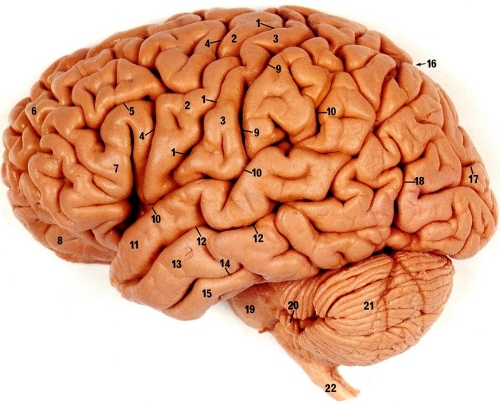
Sometimes I don't think this gets enough credit for what it is capable of. [5]


Speaking economically, Snyder does mention something important that I have neglected so far: “Economics…must learn the rules of the greater realm.”[6] Economy is driven by self-interest, and often the interests of the collective self often conflict with the interests of the whole. It is the principle of equilibrium that we will find some point to balance both of those interests, but it is frighteningly obvious that this point is not ideally located.

After reading Tyler’s entry, I realize possibly the most important aspect of the primitive—companionship. Vegging is kickass and one of my favorite past times. But it does indeed get old after a very short time. Why? Because it is so singular. Sometimes company goes a long way. A close friend or even a stranger can alleviate the pangs of loneliness. Even an android feels the same way, “’You don’t have any friends. You’re a lot worse than I saw you this morning; it’s because—‘ ‘I have friends…Or I had. Seven of them. That was to start with, but now the bounty hunters have had time to get to work.” [7] Though I haven’t explicitly mentioned it, interdependence and coexistence are fundamentals of the human condition, even from an economic viewpoint. These are both facets of emotional intelligence, and thus emotional intelligence is something that an android possesses.

Where would I be without them?

Honestly, I do not yearn for the primitive. Rather, I thrive in this economic setting that I have described, and I do not want it to change. The emotional battles I fight every day—that everyone fights everyday—are sometimes taxing, but I attribute that to the complexities of adulthood and thus a divergence from the primitive. Although I just wrote that I do not want a change to the primitive, I do not deny that perhaps, a change to the primitive would best suit me—all of us.


[1]Gary Snyder, “Poetry and the Primitive: Notes on Poetry as an Ecological Survival Technique,” X52
[2]http://www.postaudio.co.uk/education/acoustics/room_images/oblique.png
[3]Gary Snyder, “Poetry and the Primitive: Notes on Poetry as an Ecological Survival Technique,” X49
[4]Gary Snyder, “Poetry and the Primitive: Notes on Poetry as an Ecological Survival Technique,” X49
[5]http://www.ipmc.cnrs.fr/~duprat/neurophysiology/images/brain2.jpg
[6]Gary Snyder, “Poetry and the Primitive: Notes on Poetry as an Ecological Survival Technique,” X53
[7]Philip K. Dick, Do Androids Dream of Electric Sheep?, 147
[8]http://www2.warnerbros.com/friendstv/img/friends_index.jpg