Not quite parallel and not quite orthogonal. A healthy medium, one might say. [2]
At the same time, the primitive is provocative, if not haunting. I think Snyder waxes romantic on the side of the primitive, giving it far too much credit and neglecting many realities that twinkle under my economic, conservatively-colored lens. Apparently, “Something is always eating at the American heart like acid: it is the knowledge of what we have done to our continent, and to the American Indian.” [3] While the butchering and rape of the natives to this country is unsettling, the damage done to the land itself is less so. Especially from an economic standpoint: nature, or the primitive in a general sense, will be preserved once the cost (physical and spiritual) of its destruction exceeds the benefit of its product. Snyder further states that primitive cultures have “knowledge of connection and responsibility which amounts to a spiritual ascesis for the whole community.” [4] At first, I wanted to chastise him for claiming we are responsible for some sort of preservation, but I think we do owe responsibility to nature and I think we are responsible. This responsibility kicks in, once again, when the nature of economics allows, but mankind has more of an appreciation for its primitive that Snyder gives us credit for.
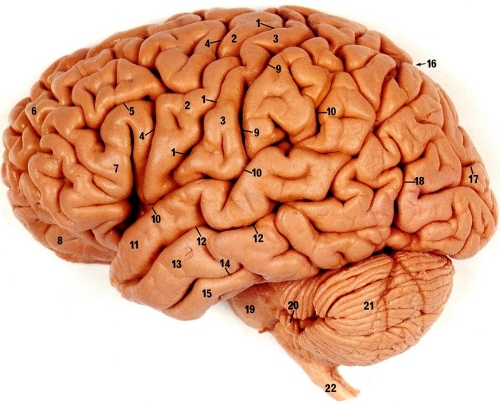
Sometimes I don't think this gets enough credit for what it is capable of. [5]
Speaking economically, Snyder does mention something important that I have neglected so far: “Economics…must learn the rules of the greater realm.”[6] Economy is driven by self-interest, and often the interests of the collective self often conflict with the interests of the whole. It is the principle of equilibrium that we will find some point to balance both of those interests, but it is frighteningly obvious that this point is not ideally located.
After reading Tyler’s entry, I realize possibly the most important aspect of the primitive—companionship. Vegging is kickass and one of my favorite past times. But it does indeed get old after a very short time. Why? Because it is so singular. Sometimes company goes a long way. A close friend or even a stranger can alleviate the pangs of loneliness. Even an android feels the same way, “’You don’t have any friends. You’re a lot worse than I saw you this morning; it’s because—‘ ‘I have friends…Or I had. Seven of them. That was to start with, but now the bounty hunters have had time to get to work.” [7] Though I haven’t explicitly mentioned it, interdependence and coexistence are fundamentals of the human condition, even from an economic viewpoint. These are both facets of emotional intelligence, and thus emotional intelligence is something that an android possesses.
Where would I be without them?

Honestly, I do not yearn for the primitive. Rather, I thrive in this economic setting that I have described, and I do not want it to change. The emotional battles I fight every day—that everyone fights everyday—are sometimes taxing, but I attribute that to the complexities of adulthood and thus a divergence from the primitive. Although I just wrote that I do not want a change to the primitive, I do not deny that perhaps, a change to the primitive would best suit me—all of us.
[1]Gary Snyder, “Poetry and the Primitive: Notes on Poetry as an Ecological Survival Technique,” X52
[2]http://www.postaudio.co.uk/education/acoustics/room_images/oblique.png
[3]Gary Snyder, “Poetry and the Primitive: Notes on Poetry as an Ecological Survival Technique,” X49
[4]Gary Snyder, “Poetry and the Primitive: Notes on Poetry as an Ecological Survival Technique,” X49
[5]http://www.ipmc.cnrs.fr/~duprat/neurophysiology/images/brain2.jpg
[6]Gary Snyder, “Poetry and the Primitive: Notes on Poetry as an Ecological Survival Technique,” X53
[7]Philip K. Dick, Do Androids Dream of Electric Sheep?, 147
[8]http://www2.warnerbros.com/friendstv/img/friends_index.jpg

No comments:
Post a Comment